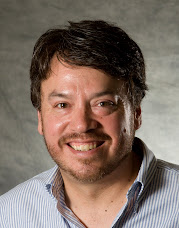
Sophomore year of high school, I was a textbook Northern California nerd, a geek, a sissy. Inside, I was troubled; at home, I was a troublemaker, so my parents sent me off to an all-boys Jesuit college prep as a boarder in the hopes I'd straighten up. (Intepret that as you will.) The school valued academics and athletics, and most students excelled in one, if not both. A sissy, yes, but at least a studious one, I was somewhat in my element. I kept to myself, but when bored I drifted down to the basement to read or watch television. Unfortunately, during the early weeks of school the two sets seemed perpetually tuned to Charlie's Angels or sports--football or baseball.
My father was a baseball fan, a former high-school player who followed the A's and the Giant's on the radio; my younger brothers actually played Little League. I was too restless, too imaginative for the longueurs of baseball. Nevertheless, that fall in the dorm, I wandered down to the basement and stood in the corner watching the odd game over the shoulders of boys who could track the pitch count without trying, remembered who the matchup in the last no-hitter, knew a balk from a ball. New York could have been in China; same with Los Angeles. Yet some, despite Bay Area-SoCal division, stayed loyal to California and pulled for Dodger Blue; others, whether from family tradition, league loyalty, or sheer transcontinental contrariness, pulled for the Bronx Bombers. My decision came easily, if hormonally: Bucky Dent was simply cuter than Steve Garvey.
Whatever my personal motivations for watching, the game began to yield a sense of its mysteries that fall; the New York franchise, a sense of its sportsmanship and history, its notoriety and celebrity. Jackson. Dent. Munson. Through the cheers, jeers, and boos of the other students, the play-by-play of Howard Cosell and Keith Jackson, and growing familiarity with a now-legendary roster, I slowly, by default more than design, became a Yankee fan. And a baseball fan. And a sports fan in general. My Yankee loyalty was tested through the years; as an adult watching with friends in the stands at Candlestick Park or the Oakland Coliseum, I even tried to muster some affection for either of the Bay Area franchises, but I couldn't. The Giants belonged to my brothers, and the A's to Dad. Besides, I'd already surrendered my affections; I couldn't regift them. Fifteen years' residence in the Big Apple and attendance at many, many games later made the , but the lounge in the bottom of O'Donnell Hall remains the crucible where that first link, however uncertain, however odd, was made.
Saturday, October 31, 2009


Saturday, October 17, 2009
7.1, 10/17/1989, 5:04 p.m.
It is nearly 5:04 local time, here in Buffalo, and twenty years have passed. I was on the campus of UC Berkeley, and I’d just gotten out of my discussion section for Major British Writers. It was just about five, so I decided on an early dinner before heading back home across the Bay to San Francisco. The campus walks and plazas thronged with students and professors and others, walking, riding bicycles, heading home. At Bancroft Avenue, I was waiting for the light to change, when the girl next to me and I looked at each other. I knew she was thinking the same thing: was the traffic really making the ground shake like that? Nothing major, just an unusually strong vibration underfoot. People looked up. The traffic lights were bobbing, but maybe it was just the wind. An enormous plate glass window across the street suddenly shattered—exploded, really. But nothing else broke, and I remember thinking that it must have been older, weaker glass, not safety glass. The shaking stopped. Having never been outside in an earthquake before, I quickly tucked the experience into my catalog of seismic memories and headed down Telegraph.
I decided to browse Cody’s before dinner and to my surprise the store’s floor was covered with books that had fallen from the shelves. It must have felt stronger inside, I thought. One of the clerks covered the mouthpiece of the phone and said to another, “The Bay Bridge is down.” What? No...impossible. I remembered that the burrito place on Durant had a television, and there, seeing the collapsed Cypress Freeway for the first time, realized it had been a serious earthquake, the biggest in years. The destruction was localized, but still. A decade-plus later, on 9/11, there was a similar sense of very tightly confined destruction in New York City, a sense that just miles from major catastrophe, there was milk to be bought, cats to be fed, dogs to be walked.
The bridge was closed, and BART wasn’t running, so I went over to the apartment of some friends and asked if I could stay the night. Of course, they said, and we made a reunion/party of it. As reports trickled in—the location of the epicenter, the interruption and cancellation of the World Series—I tried to track down the various members of my large family, which was tricky because the circuits were jammed. Friends in Santa Cruz couldn’t be reached yet, but I called my roommate and reassured her that I’d be back the next day. Finally I reached my mother and learned she and Dad had been on the freeway (she thought a tire blew) and that my brother Philippe had actually been at Candlestick Park (still tailgating in the parking lot, he later told me). At one point my mother said, “Oh, there’s another aftershock.” “I don’t feel it.” “You probably will in a moment,” she said. Sure enough, like a swell at sea, the earth lifted and fell for a second; from my friends’ apartment we could hear the students in the high-rise dorms screaming like rollercoaster riders.
BART was back up and running the next day, so I thanked my friends and headed home. As the train swung along the curve closest to the Cypress Freeway, a hush fell over the passengers. People craned their necks, but you couldn’t see anything. During the ride through the Trans-Bay tube, there was even more silence and not a little tension. Back in the City, on the street, I noticed cracks in older buildings that hadn’t been there before, but as stated, the damage felt confined to other places. It turned out my apartment building was one of them: the four-story chimney on the east side had sheared away and fallen on the landlord’s chocolate-brown BMW. And my bedroom, which perched out over the backyard, looked like someone had turned it over, once, like a snowglobe. “Mary’s coming up from Santa Cruz,” my roommate said. Since we didn’t have any gas or water, we all went out for sushi. I remember that it felt like a party. The following night, another friend invited us over for a dinner of homemade paté, baguettes, stew, and red wine. It was my first experience of a sense of a community forged through necessity, through crisis. My first experience of the connectivity of human beings, of our need to reach out and ask if we’re okay. And we are.
I decided to browse Cody’s before dinner and to my surprise the store’s floor was covered with books that had fallen from the shelves. It must have felt stronger inside, I thought. One of the clerks covered the mouthpiece of the phone and said to another, “The Bay Bridge is down.” What? No...impossible. I remembered that the burrito place on Durant had a television, and there, seeing the collapsed Cypress Freeway for the first time, realized it had been a serious earthquake, the biggest in years. The destruction was localized, but still. A decade-plus later, on 9/11, there was a similar sense of very tightly confined destruction in New York City, a sense that just miles from major catastrophe, there was milk to be bought, cats to be fed, dogs to be walked.
The bridge was closed, and BART wasn’t running, so I went over to the apartment of some friends and asked if I could stay the night. Of course, they said, and we made a reunion/party of it. As reports trickled in—the location of the epicenter, the interruption and cancellation of the World Series—I tried to track down the various members of my large family, which was tricky because the circuits were jammed. Friends in Santa Cruz couldn’t be reached yet, but I called my roommate and reassured her that I’d be back the next day. Finally I reached my mother and learned she and Dad had been on the freeway (she thought a tire blew) and that my brother Philippe had actually been at Candlestick Park (still tailgating in the parking lot, he later told me). At one point my mother said, “Oh, there’s another aftershock.” “I don’t feel it.” “You probably will in a moment,” she said. Sure enough, like a swell at sea, the earth lifted and fell for a second; from my friends’ apartment we could hear the students in the high-rise dorms screaming like rollercoaster riders.
BART was back up and running the next day, so I thanked my friends and headed home. As the train swung along the curve closest to the Cypress Freeway, a hush fell over the passengers. People craned their necks, but you couldn’t see anything. During the ride through the Trans-Bay tube, there was even more silence and not a little tension. Back in the City, on the street, I noticed cracks in older buildings that hadn’t been there before, but as stated, the damage felt confined to other places. It turned out my apartment building was one of them: the four-story chimney on the east side had sheared away and fallen on the landlord’s chocolate-brown BMW. And my bedroom, which perched out over the backyard, looked like someone had turned it over, once, like a snowglobe. “Mary’s coming up from Santa Cruz,” my roommate said. Since we didn’t have any gas or water, we all went out for sushi. I remember that it felt like a party. The following night, another friend invited us over for a dinner of homemade paté, baguettes, stew, and red wine. It was my first experience of a sense of a community forged through necessity, through crisis. My first experience of the connectivity of human beings, of our need to reach out and ask if we’re okay. And we are.
Monday, October 5, 2009
The Americans
The Robert Frank show at the Metropolitan Museum of Art isn't a blockbuster, and that's what's great about it. Frank was a Swiss-born Jew who emigrated to the United States shortly after the end of the Second World War. He made the acquaintance of photography pioneers like Edward Steichen and Walker Evans, and with Evans help received a 1955 Guggenheim Fellowship to travel across America and record what he saw on film. The resulting book had 83 black-and-white images from hundreds of rolls Frank shot all over the country. He turned his lens on both what was hopeful about the United States--the country that defeated variants of nationalistic fascism in Europe and Asia--as well as what was troubling and bleak. He caught the racism that persisted a century after the Civil War; at the first crest of the long, postwar economic boom, he caught the poverty and bleakness in the shallows; and he caught the darkness that the brilliance of that boom obscured.
In the show, the photographs from the book are laid out in sequence; they're framed simply and similarly, with identifying cards making explicit (at times, perhaps too explicit) the subtler visual connections that Frank and his editors carefully worked into the sequence. Frank's original letters and applications to the Guggenheim Foundation are included, along with various drafts and correspondence between Frank and Jack Kerouac, who wrote an introduction to the volume. The images are largely informal, candid, in the vein of Walker Evans's iconic photos for Let Us Now Praise Famous Men. Others are like Brassai's interior shots; still others are out of focus, askew. Many of the original contact sheets are included, and one can see the broader sense of vision with which the images were cropped.
Frank experienced racism on his road trips, but remained circumspect about it; the incidents, which included jail time and verbal humiliation by officers of the law, can almost be read as part of the subtext Frank was seeking, that he sensed was out there, waiting to be recorded. As others have noticed, the book is in the tradition of the Outsider Gazing at America, like de Tocqueville, Dickens, Frances Trollope in the 19th century. But unlike those, more critical, caustic takes, Frank's book is subtly affectionate, perhaps even optimistic and hopeful.
In the show, the photographs from the book are laid out in sequence; they're framed simply and similarly, with identifying cards making explicit (at times, perhaps too explicit) the subtler visual connections that Frank and his editors carefully worked into the sequence. Frank's original letters and applications to the Guggenheim Foundation are included, along with various drafts and correspondence between Frank and Jack Kerouac, who wrote an introduction to the volume. The images are largely informal, candid, in the vein of Walker Evans's iconic photos for Let Us Now Praise Famous Men. Others are like Brassai's interior shots; still others are out of focus, askew. Many of the original contact sheets are included, and one can see the broader sense of vision with which the images were cropped.
Frank experienced racism on his road trips, but remained circumspect about it; the incidents, which included jail time and verbal humiliation by officers of the law, can almost be read as part of the subtext Frank was seeking, that he sensed was out there, waiting to be recorded. As others have noticed, the book is in the tradition of the Outsider Gazing at America, like de Tocqueville, Dickens, Frances Trollope in the 19th century. But unlike those, more critical, caustic takes, Frank's book is subtly affectionate, perhaps even optimistic and hopeful.
Subscribe to:
Posts (Atom)