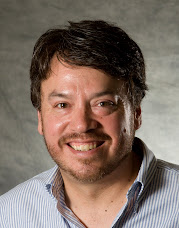
Sophomore year of high school, I was a textbook Northern California nerd, a geek, a sissy. Inside, I was troubled; at home, I was a troublemaker, so my parents sent me off to an all-boys Jesuit college prep as a boarder in the hopes I'd straighten up. (Intepret that as you will.) The school valued academics and athletics, and most students excelled in one, if not both. A sissy, yes, but at least a studious one, I was somewhat in my element. I kept to myself, but when bored I drifted down to the basement to read or watch television. Unfortunately, during the early weeks of school the two sets seemed perpetually tuned to Charlie's Angels or sports--football or baseball.
My father was a baseball fan, a former high-school player who followed the A's and the Giant's on the radio; my younger brothers actually played Little League. I was too restless, too imaginative for the longueurs of baseball. Nevertheless, that fall in the dorm, I wandered down to the basement and stood in the corner watching the odd game over the shoulders of boys who could track the pitch count without trying, remembered who the matchup in the last no-hitter, knew a balk from a ball. New York could have been in China; same with Los Angeles. Yet some, despite Bay Area-SoCal division, stayed loyal to California and pulled for Dodger Blue; others, whether from family tradition, league loyalty, or sheer transcontinental contrariness, pulled for the Bronx Bombers. My decision came easily, if hormonally: Bucky Dent was simply cuter than Steve Garvey.
Whatever my personal motivations for watching, the game began to yield a sense of its mysteries that fall; the New York franchise, a sense of its sportsmanship and history, its notoriety and celebrity. Jackson. Dent. Munson. Through the cheers, jeers, and boos of the other students, the play-by-play of Howard Cosell and Keith Jackson, and growing familiarity with a now-legendary roster, I slowly, by default more than design, became a Yankee fan. And a baseball fan. And a sports fan in general. My Yankee loyalty was tested through the years; as an adult watching with friends in the stands at Candlestick Park or the Oakland Coliseum, I even tried to muster some affection for either of the Bay Area franchises, but I couldn't. The Giants belonged to my brothers, and the A's to Dad. Besides, I'd already surrendered my affections; I couldn't regift them. Fifteen years' residence in the Big Apple and attendance at many, many games later made the , but the lounge in the bottom of O'Donnell Hall remains the crucible where that first link, however uncertain, however odd, was made.
Saturday, October 31, 2009


Saturday, October 17, 2009
7.1, 10/17/1989, 5:04 p.m.
It is nearly 5:04 local time, here in Buffalo, and twenty years have passed. I was on the campus of UC Berkeley, and I’d just gotten out of my discussion section for Major British Writers. It was just about five, so I decided on an early dinner before heading back home across the Bay to San Francisco. The campus walks and plazas thronged with students and professors and others, walking, riding bicycles, heading home. At Bancroft Avenue, I was waiting for the light to change, when the girl next to me and I looked at each other. I knew she was thinking the same thing: was the traffic really making the ground shake like that? Nothing major, just an unusually strong vibration underfoot. People looked up. The traffic lights were bobbing, but maybe it was just the wind. An enormous plate glass window across the street suddenly shattered—exploded, really. But nothing else broke, and I remember thinking that it must have been older, weaker glass, not safety glass. The shaking stopped. Having never been outside in an earthquake before, I quickly tucked the experience into my catalog of seismic memories and headed down Telegraph.
I decided to browse Cody’s before dinner and to my surprise the store’s floor was covered with books that had fallen from the shelves. It must have felt stronger inside, I thought. One of the clerks covered the mouthpiece of the phone and said to another, “The Bay Bridge is down.” What? No...impossible. I remembered that the burrito place on Durant had a television, and there, seeing the collapsed Cypress Freeway for the first time, realized it had been a serious earthquake, the biggest in years. The destruction was localized, but still. A decade-plus later, on 9/11, there was a similar sense of very tightly confined destruction in New York City, a sense that just miles from major catastrophe, there was milk to be bought, cats to be fed, dogs to be walked.
The bridge was closed, and BART wasn’t running, so I went over to the apartment of some friends and asked if I could stay the night. Of course, they said, and we made a reunion/party of it. As reports trickled in—the location of the epicenter, the interruption and cancellation of the World Series—I tried to track down the various members of my large family, which was tricky because the circuits were jammed. Friends in Santa Cruz couldn’t be reached yet, but I called my roommate and reassured her that I’d be back the next day. Finally I reached my mother and learned she and Dad had been on the freeway (she thought a tire blew) and that my brother Philippe had actually been at Candlestick Park (still tailgating in the parking lot, he later told me). At one point my mother said, “Oh, there’s another aftershock.” “I don’t feel it.” “You probably will in a moment,” she said. Sure enough, like a swell at sea, the earth lifted and fell for a second; from my friends’ apartment we could hear the students in the high-rise dorms screaming like rollercoaster riders.
BART was back up and running the next day, so I thanked my friends and headed home. As the train swung along the curve closest to the Cypress Freeway, a hush fell over the passengers. People craned their necks, but you couldn’t see anything. During the ride through the Trans-Bay tube, there was even more silence and not a little tension. Back in the City, on the street, I noticed cracks in older buildings that hadn’t been there before, but as stated, the damage felt confined to other places. It turned out my apartment building was one of them: the four-story chimney on the east side had sheared away and fallen on the landlord’s chocolate-brown BMW. And my bedroom, which perched out over the backyard, looked like someone had turned it over, once, like a snowglobe. “Mary’s coming up from Santa Cruz,” my roommate said. Since we didn’t have any gas or water, we all went out for sushi. I remember that it felt like a party. The following night, another friend invited us over for a dinner of homemade paté, baguettes, stew, and red wine. It was my first experience of a sense of a community forged through necessity, through crisis. My first experience of the connectivity of human beings, of our need to reach out and ask if we’re okay. And we are.
I decided to browse Cody’s before dinner and to my surprise the store’s floor was covered with books that had fallen from the shelves. It must have felt stronger inside, I thought. One of the clerks covered the mouthpiece of the phone and said to another, “The Bay Bridge is down.” What? No...impossible. I remembered that the burrito place on Durant had a television, and there, seeing the collapsed Cypress Freeway for the first time, realized it had been a serious earthquake, the biggest in years. The destruction was localized, but still. A decade-plus later, on 9/11, there was a similar sense of very tightly confined destruction in New York City, a sense that just miles from major catastrophe, there was milk to be bought, cats to be fed, dogs to be walked.
The bridge was closed, and BART wasn’t running, so I went over to the apartment of some friends and asked if I could stay the night. Of course, they said, and we made a reunion/party of it. As reports trickled in—the location of the epicenter, the interruption and cancellation of the World Series—I tried to track down the various members of my large family, which was tricky because the circuits were jammed. Friends in Santa Cruz couldn’t be reached yet, but I called my roommate and reassured her that I’d be back the next day. Finally I reached my mother and learned she and Dad had been on the freeway (she thought a tire blew) and that my brother Philippe had actually been at Candlestick Park (still tailgating in the parking lot, he later told me). At one point my mother said, “Oh, there’s another aftershock.” “I don’t feel it.” “You probably will in a moment,” she said. Sure enough, like a swell at sea, the earth lifted and fell for a second; from my friends’ apartment we could hear the students in the high-rise dorms screaming like rollercoaster riders.
BART was back up and running the next day, so I thanked my friends and headed home. As the train swung along the curve closest to the Cypress Freeway, a hush fell over the passengers. People craned their necks, but you couldn’t see anything. During the ride through the Trans-Bay tube, there was even more silence and not a little tension. Back in the City, on the street, I noticed cracks in older buildings that hadn’t been there before, but as stated, the damage felt confined to other places. It turned out my apartment building was one of them: the four-story chimney on the east side had sheared away and fallen on the landlord’s chocolate-brown BMW. And my bedroom, which perched out over the backyard, looked like someone had turned it over, once, like a snowglobe. “Mary’s coming up from Santa Cruz,” my roommate said. Since we didn’t have any gas or water, we all went out for sushi. I remember that it felt like a party. The following night, another friend invited us over for a dinner of homemade paté, baguettes, stew, and red wine. It was my first experience of a sense of a community forged through necessity, through crisis. My first experience of the connectivity of human beings, of our need to reach out and ask if we’re okay. And we are.
Monday, October 5, 2009
The Americans
The Robert Frank show at the Metropolitan Museum of Art isn't a blockbuster, and that's what's great about it. Frank was a Swiss-born Jew who emigrated to the United States shortly after the end of the Second World War. He made the acquaintance of photography pioneers like Edward Steichen and Walker Evans, and with Evans help received a 1955 Guggenheim Fellowship to travel across America and record what he saw on film. The resulting book had 83 black-and-white images from hundreds of rolls Frank shot all over the country. He turned his lens on both what was hopeful about the United States--the country that defeated variants of nationalistic fascism in Europe and Asia--as well as what was troubling and bleak. He caught the racism that persisted a century after the Civil War; at the first crest of the long, postwar economic boom, he caught the poverty and bleakness in the shallows; and he caught the darkness that the brilliance of that boom obscured.
In the show, the photographs from the book are laid out in sequence; they're framed simply and similarly, with identifying cards making explicit (at times, perhaps too explicit) the subtler visual connections that Frank and his editors carefully worked into the sequence. Frank's original letters and applications to the Guggenheim Foundation are included, along with various drafts and correspondence between Frank and Jack Kerouac, who wrote an introduction to the volume. The images are largely informal, candid, in the vein of Walker Evans's iconic photos for Let Us Now Praise Famous Men. Others are like Brassai's interior shots; still others are out of focus, askew. Many of the original contact sheets are included, and one can see the broader sense of vision with which the images were cropped.
Frank experienced racism on his road trips, but remained circumspect about it; the incidents, which included jail time and verbal humiliation by officers of the law, can almost be read as part of the subtext Frank was seeking, that he sensed was out there, waiting to be recorded. As others have noticed, the book is in the tradition of the Outsider Gazing at America, like de Tocqueville, Dickens, Frances Trollope in the 19th century. But unlike those, more critical, caustic takes, Frank's book is subtly affectionate, perhaps even optimistic and hopeful.
In the show, the photographs from the book are laid out in sequence; they're framed simply and similarly, with identifying cards making explicit (at times, perhaps too explicit) the subtler visual connections that Frank and his editors carefully worked into the sequence. Frank's original letters and applications to the Guggenheim Foundation are included, along with various drafts and correspondence between Frank and Jack Kerouac, who wrote an introduction to the volume. The images are largely informal, candid, in the vein of Walker Evans's iconic photos for Let Us Now Praise Famous Men. Others are like Brassai's interior shots; still others are out of focus, askew. Many of the original contact sheets are included, and one can see the broader sense of vision with which the images were cropped.
Frank experienced racism on his road trips, but remained circumspect about it; the incidents, which included jail time and verbal humiliation by officers of the law, can almost be read as part of the subtext Frank was seeking, that he sensed was out there, waiting to be recorded. As others have noticed, the book is in the tradition of the Outsider Gazing at America, like de Tocqueville, Dickens, Frances Trollope in the 19th century. But unlike those, more critical, caustic takes, Frank's book is subtly affectionate, perhaps even optimistic and hopeful.
Saturday, September 26, 2009
The Buffalo River
The school year is a month underway, and I am drowning in papers and quizzes and exams to grade. I'm teaching the usual Intro to Lit survey at Niagara University, and although there's some comfort in that, there's also the undeniable fact that every class is different, and every student is different. It's nice to back in the smaller room I had the first semester, and I'm very glad that the students are good at contributing to the class discussion. My primary objectives are two-fold--getting the students to enjoy the idea of talking about literature as much as possible in this age of YouTube and Facebook, and teaching to the objectives of the syllabus and the department. We really flew through the fiction unit; I was on the verge of postponing Friday's exam, but I'm glad we kept on track. The first paper assignment is coming up fast, and then we get into poetry, which can be very challenging. As my friend Doug said last night at dinner, teaching is infinitely improvable.
The American Literature survey has proved a little bit of a challenge. There are 36 students in the class, and the demographics are broad. I have seniors as well as home-schooled freshmen. I have older students, and the class is 80% female. This makes for a challenging discussion, but I'm going to keep adjusting my methods until things get a little looser and freer. This past week both classes had exam-fear in their faces.
At Medaille, the class I'm teaching is an intermediate composition class. It's also new to me, and something of a challenge, but I'm beginning to see how the three classes fit together and play off of each other. The students are so young, and the other day when I (for what reason, God only knows) used the phrase "you bet your sweet bippy," I had them (and me) laughing. I realized that explaining "Rowan and Martin's Laugh-In" to them was utterly beside the point. The sad truth is that most of their parents probably don't remember it. Anyway, we're doing this Learning Community thing throughout the semester, which ties their General Education class on critical thinking in with my class. We're working around the theme of "Life as a River" and on Thursday we did something very cool: we took a canoe trip on the Buffalo River. We took the trip with the help of a team from Buffalo Niagara Riverkeeper. One of the things we learned was that the river has a "pulse": it actually "reverses" its flow every three hours or so. This means that contaminants aren't cycled downriver--and of course, thinking that way isn't too smart to begin with. We learned that the storm overflow and the sewage overflow combine when the runoff is sizeable, releasing more contaminants into the river--and the surrounding soil. We learned that a number of plants have overgrown the area, driving out more diverse, appropriate species.
We paddled from the junction of Cayuga Creek and Buffalo Creek downriver to the Ogden Street Bridge, and that's where two of the students tipped over. The Riverkeeper team had only moments prior remarked that there had been no upsets the entire season, when we all heard a shout and a splash as the two were dumped into the river. Impressively, the students kept their cool and didn't panic. It took a long time to get them back in the canoe. The canoe was turned over and "t-ed"--placed crosswise over the gunwales of one of one of the leaders' canoes so that all the water drained out. We all finally made it back to the launching point, and relatively speaking, safe and sound.
The American Literature survey has proved a little bit of a challenge. There are 36 students in the class, and the demographics are broad. I have seniors as well as home-schooled freshmen. I have older students, and the class is 80% female. This makes for a challenging discussion, but I'm going to keep adjusting my methods until things get a little looser and freer. This past week both classes had exam-fear in their faces.
At Medaille, the class I'm teaching is an intermediate composition class. It's also new to me, and something of a challenge, but I'm beginning to see how the three classes fit together and play off of each other. The students are so young, and the other day when I (for what reason, God only knows) used the phrase "you bet your sweet bippy," I had them (and me) laughing. I realized that explaining "Rowan and Martin's Laugh-In" to them was utterly beside the point. The sad truth is that most of their parents probably don't remember it. Anyway, we're doing this Learning Community thing throughout the semester, which ties their General Education class on critical thinking in with my class. We're working around the theme of "Life as a River" and on Thursday we did something very cool: we took a canoe trip on the Buffalo River. We took the trip with the help of a team from Buffalo Niagara Riverkeeper. One of the things we learned was that the river has a "pulse": it actually "reverses" its flow every three hours or so. This means that contaminants aren't cycled downriver--and of course, thinking that way isn't too smart to begin with. We learned that the storm overflow and the sewage overflow combine when the runoff is sizeable, releasing more contaminants into the river--and the surrounding soil. We learned that a number of plants have overgrown the area, driving out more diverse, appropriate species.
We paddled from the junction of Cayuga Creek and Buffalo Creek downriver to the Ogden Street Bridge, and that's where two of the students tipped over. The Riverkeeper team had only moments prior remarked that there had been no upsets the entire season, when we all heard a shout and a splash as the two were dumped into the river. Impressively, the students kept their cool and didn't panic. It took a long time to get them back in the canoe. The canoe was turned over and "t-ed"--placed crosswise over the gunwales of one of one of the leaders' canoes so that all the water drained out. We all finally made it back to the launching point, and relatively speaking, safe and sound.
Thursday, September 3, 2009
+41° 7' 38.42", -72° 17' 3.13"

Two weeks ago, after the memorial gathering with my friends from Columbia, I spent the night in Brooklyn at my friend’s apartment. In the morning Helene, her two kids, Dean, 9, and Paulina, 6, and I drove out to the North Fork of Long Island. Paulina was shy, and very much a girl, but Dean was all boy, and we spent a big part of the drive east discussing horror and disaster movies. We got on the subject because he mentioned wanting to see 2012, Roland Emmerich’s forthcoming apocalypse. (I guess he never runs out of floods and fires and landslides.) Dean wanted to know the plots of as many of the movies I could remember, and when I launched into the Alien series we were set for the better half of the two-hour drive. (Paulina was watching a video...and it wasn't Alien.)
The house Helene and her husband rent was on Peter’s Neck, which juts out between Orient Harbor and Gids Bay. The heat and humidity were ferocious, and so were the mosquitoes. It was the first time all year I couldn’t be outside for long without drenching myself in Off! Read, Jenny, and Lake Blinn, friends from Keene, New Hampshire (Read is also a Columbia alum) were waiting for us. We all tumbled out of the car and got settled with some fried chicken and chips. Another friend from CU, Laura, showed up with her two kids, Declan, 9, and Jaden Li, 5, and soon, doused with bug repellent, all the kids were chasing fiddler crabs through the tidal shallows and grasses. Jodi and her partner Jocelyn showed up, and we got ready to head to the beach. The heat was still intense, so the water was cold and refreshing. We splashed around for a while and explored some of the rocks. The others arrived with Boogie boards and umbrellas and towels. We spent a long while in the water, and I was in the process of dragging Lake around on the Boogie board, when suddenly both of us jumped. “Ouch! Something bit me!” said Lake. “It’s a jellyfish,” I said. “I got stung too.” I’d never been stung by a jellyfish before. The sensation is like pins-and-needles, only coming from outside. Lake got out of the water, and between us someone remembered that peeing on a jellyfish sting relieves the pain. (I didn’t ask anyone to pee on my sting.) Eventually we went home and started cooking up linguine with clams (discovering that the secret is that you can never have too much sauce) along with an impromptu marinara for the kids. Read and his family had to start home for New Hampshire (they had to catch the 7 o’clock ferry to New London, CT), but the rest of us sat and ate and talked into the darkness. Eventually Jodi and Jocelyn had to leave, but the rest of us stayed the night.
The next day those of us who remained had a leisurely morning, and all remained fairly calm until the keys to the Volvo stationwagon got locked inside by yours truly. There was a moment’s panic until we figured out there was nothing to do but divide into two groups, one that stayed home and waited for AAA, another that went back to the beach and waited. The lunch and most of the towels were in the car’s rear compartment, so we had to wait for the roadside assistance to show up at the house, open the car, and then for Helene and her son to come with the food. I decided to take a long, penitential walk on the beach--actually, I just wanted a chance to explore, and Laura was watching the kids. By the time I returned, the others had arrived with the food.
The plan for the remainder of the day included ice cream at Nina’s in Orient Point. Helene extolled their root beer floats, and after a hot day at the beach, a delicious, peppery, vanilla-y, creamy, foamy root beer float sounded delicious. We were waiting for the kids to finish their treats, when a man about my age walked in with an older woman, who was wearing a tank top and shorts with a pair of raspberry-colored Ugg boots, which seemed odd considering that the temperature was in the low nineties. I noticed the boots, then noticed the man who was with her. I had that frisson you get only in the moment of recognizing someone famous, and thought, Well, I guess you can’t have a trip to New York…or the North Fork of Long Island…and not see a celebrity. The man and I nodded at each other--in this case, I felt sure that it was more gaydar than him knowing that I knew who he was, and also felt sure that Helene, who knows more about music than I do, recognized him, but was playing it cool like a true New Yorker. Only when we got out to the sidewalk did I say to Laura, “Did you see who that was? Rufus Wainwright!” “You’re kidding!” both women said. “I thought you saw him and were playing it cool…” I said to Helene. “I wondered why you were being so friendly with him,” said Laura, a twinkle in her eye.

Laura and kids headed back to Brooklyn within the hour, and I hung out with Helene and Dean and Paulina for one more day, enjoying the cool and the quiet and the marvelous beauty of Peter’s Neck. I watched the sun go down over the western end of Long Island, and told myself that the summer had come to an end. I returned to Buffalo reconnected with my friends from Columbia, ready for the new school year.
Saturday, August 22, 2009
Only Morningside, excellent and fair...
After an exceptionally busy week in Buffalo that included a party for 60 here at my apartment on Friday night, I flew down to NYC for a couple of days and then ventured out to the North Fork of Long Island. All in all, an embarrassment of reconnections, remembrances, and the riches that are relationships.
I flew into JFK after getting almost no sleep. Cleaning up after the party lasted until one, one-thirty in the morning, then I had to get up early to pack since my clothes were still in the dryer. The flight downstate isn’t long enough for real sleep, but I tried. The biggest drag was the long, complicated subway ride into Manhattan. AirTrain wasn’t so bad, but the E was running local and along the F line on a construction schedule, so I transferred to the D at Rockefeller Center. Instead of getting off at Columbus Circle for an uptown local, I stayed on and ended up having to backtrack along Central Park West on a local A. Two and a half hours after my plane landed, and after turning on the AC as high as it could go, I crashed on the couch of my friend Deanne’s Upper West Side apartment and slept for a while. It was hot and sticky in NYC, the sort of weather that makes you hate the city in August.
I went down to the Village for coffee with my friend Harry, then headed up to Lincoln Center for a free dance performance at Damrosch Park. The two companies were those of Ben Munistieri and Mark Dendy. The work by the former was simple and inoffensive, if unexciting; the single piece by the latter, set to a mix of Tibetan bells and instrumental versions of Metallica (I recognized “Enter Sandman”) was long but thrilling, the kind of modern dance that makes you want to stand and cheer—which we did. The piece had about 24 dancers, and boy, did Dendy know how to use them! After the performance we headed to The Red Cat for dinner, and we were treated to some tempura of green beans and baked fontina. We ordered a variety of entrees, and the management sent out nearly a dozen desserts. It was really humbling to be treated so generously.
The following day I visited with a friend in the morning, then called on another friend who is leaving NYC for Fort Lauderdale. She and I went for a snack at Westville, right on West 10th, in my old neighborhood (1994-2001). Then I headed uptown to change my shirt (not because of the heat, but because of the coffee I spilled!) and grabbed a cab up to the Columbia campus. I hadn’t been on that McKim, Mead, and White-designed Morningside Heights main campus in several years, and unlike other places I’ve been after many years, it didn’t seem smaller; it seemed even larger, just as grand and impressive as the first time I saw it in the fall of 1987—though perhaps the lack of people helped. I met my colleagues from graduate school on the steps leading up to Dodge Hall, and instead of feeling like it had been 14 years, it felt like it had been five minutes since our last class. Yes, some gray here and there; yes, some body mass and wrinkling. But overall, it felt like a time warp. We quickly moved from one conversational knot to another, sometimes in twos, sometimes as an entire group, filling each other in on what we’d been up to. Some of us had seen each other since. Because it was so hot and humid, we quickly took some pictures by the statue of Alma Mater, then adjourned for a nearby Ethiopian restaurant called Awash. The reason for the choice was that we were there not only to reconnect with each other, but to remember our dear friend Andrew (see the post from June 22, 2009). Because Andrew lived in Brooklyn and was a writer and because of other correspondences, some passages from Sophie’s Choice were read; remembrances were offered. Photographs were passed around. Laughs were shared; tears were shed.
Grieving someone is necessarily a process, a work in progress. It goes on. It can’t be forced to closure. Seeing my friends, seeing the campus, made the reunion bittersweet and my sense of the loss of Andrew stronger. Sometimes it was so sharp and painful as I was sitting there that I couldn’t stand it. Sometimes I was comforted by the others’ presence; sometimes I felt saturated by sadness yet was numb to it. I was struck by one individual who insisted on a way of remembering Andrew that in my opinion resisted to admit the truth of how he died. Maybe if you refuse to admit how someone dies when he takes his own life, then you are also refuse to admit how he lived. I don’t know. I was able to offer some of my own thoughts and feelings about suicide, having been so close to it at one very painful moment in my life. I felt that I understood very, very clearly where Andrew had to go to do what he had done.
To be continued…
I flew into JFK after getting almost no sleep. Cleaning up after the party lasted until one, one-thirty in the morning, then I had to get up early to pack since my clothes were still in the dryer. The flight downstate isn’t long enough for real sleep, but I tried. The biggest drag was the long, complicated subway ride into Manhattan. AirTrain wasn’t so bad, but the E was running local and along the F line on a construction schedule, so I transferred to the D at Rockefeller Center. Instead of getting off at Columbus Circle for an uptown local, I stayed on and ended up having to backtrack along Central Park West on a local A. Two and a half hours after my plane landed, and after turning on the AC as high as it could go, I crashed on the couch of my friend Deanne’s Upper West Side apartment and slept for a while. It was hot and sticky in NYC, the sort of weather that makes you hate the city in August.
I went down to the Village for coffee with my friend Harry, then headed up to Lincoln Center for a free dance performance at Damrosch Park. The two companies were those of Ben Munistieri and Mark Dendy. The work by the former was simple and inoffensive, if unexciting; the single piece by the latter, set to a mix of Tibetan bells and instrumental versions of Metallica (I recognized “Enter Sandman”) was long but thrilling, the kind of modern dance that makes you want to stand and cheer—which we did. The piece had about 24 dancers, and boy, did Dendy know how to use them! After the performance we headed to The Red Cat for dinner, and we were treated to some tempura of green beans and baked fontina. We ordered a variety of entrees, and the management sent out nearly a dozen desserts. It was really humbling to be treated so generously.
The following day I visited with a friend in the morning, then called on another friend who is leaving NYC for Fort Lauderdale. She and I went for a snack at Westville, right on West 10th, in my old neighborhood (1994-2001). Then I headed uptown to change my shirt (not because of the heat, but because of the coffee I spilled!) and grabbed a cab up to the Columbia campus. I hadn’t been on that McKim, Mead, and White-designed Morningside Heights main campus in several years, and unlike other places I’ve been after many years, it didn’t seem smaller; it seemed even larger, just as grand and impressive as the first time I saw it in the fall of 1987—though perhaps the lack of people helped. I met my colleagues from graduate school on the steps leading up to Dodge Hall, and instead of feeling like it had been 14 years, it felt like it had been five minutes since our last class. Yes, some gray here and there; yes, some body mass and wrinkling. But overall, it felt like a time warp. We quickly moved from one conversational knot to another, sometimes in twos, sometimes as an entire group, filling each other in on what we’d been up to. Some of us had seen each other since. Because it was so hot and humid, we quickly took some pictures by the statue of Alma Mater, then adjourned for a nearby Ethiopian restaurant called Awash. The reason for the choice was that we were there not only to reconnect with each other, but to remember our dear friend Andrew (see the post from June 22, 2009). Because Andrew lived in Brooklyn and was a writer and because of other correspondences, some passages from Sophie’s Choice were read; remembrances were offered. Photographs were passed around. Laughs were shared; tears were shed.
Grieving someone is necessarily a process, a work in progress. It goes on. It can’t be forced to closure. Seeing my friends, seeing the campus, made the reunion bittersweet and my sense of the loss of Andrew stronger. Sometimes it was so sharp and painful as I was sitting there that I couldn’t stand it. Sometimes I was comforted by the others’ presence; sometimes I felt saturated by sadness yet was numb to it. I was struck by one individual who insisted on a way of remembering Andrew that in my opinion resisted to admit the truth of how he died. Maybe if you refuse to admit how someone dies when he takes his own life, then you are also refuse to admit how he lived. I don’t know. I was able to offer some of my own thoughts and feelings about suicide, having been so close to it at one very painful moment in my life. I felt that I understood very, very clearly where Andrew had to go to do what he had done.
To be continued…
Sunday, August 9, 2009
Landmarks
This past couple of weeks I finally ventured to explore some areas in Buffalo I’d long been curious about. One exploration was motivated by the composition class I’ll be teaching this fall at Medaille College, the other by curiosity about a major Old Buffalo landmark.
The comp class is paired with another class in critical thinking (I confess to wondering at times what happened to good old-fashioned college classes) and we will form what is called a Learning Community. The other instructor and I will organize some of our syllabus around a theme, and we will try to link into some aspect of the “story of Buffalo.” Prof. Cullinan and I chose the theme of “life as a river” and the Buffalo River as the linking aspect. I was only vaguely aware of where the river was, and how to get there. Via the Skyway or the 190 south of downtown, I often passed by the old industrial waterfront and the deserted grain mills. But nothing in my two years here ever brought me into that part of the city, so on a recent sunny Saturday, after an errand brought me closer than I’d ever been, I took a left turn and skirted around the HSBC Arena and found myself where I wanted to be. The neighborhood is known as the First Ward, and according to Prof. Cullinan, is largely Irish (like her). I found the river by visuals, driving to the end of Hamburg Street, past McCarthy’s Pub, whose windows were crowded with handwritten community signage (“Benefit for Joey ____”). I thought of stopping, but made a mental note to return when I spotted a man walking a dog. He was in this sort of channel that looked like the remains of an old railroad bridge. When I drove to the dead end, I was at the river. I got out of the car. It was a beautiful summer day (one of the few we’ve had this year) and the grain silos were across the water. I could hear a couple sitting somewhere nearby, talking, and to my left, a solo kayaker was coming downstream. There are rusty old railway trestles, and the water looked as brackish as I expected it to be, but the sun and dry air did a lot to make the scene. Those deserted silos have a Monument Valley-meets-the Industrial Revolution grandeur, forlorn and daunting at the same time. What is going to happen to them? After leaving that spot, I drove around the First Ward some more, and eventually found my way to the mouth of the river. On the western side of the river’s mouth were some small-craft marinas and slips, and the sailboats looked very expensive compared to the mostly-deserted mills on the opposite bank. There were a couple of oil-painters across the river, so I crossed back over to investigate. This brought me to the General Mills plant, where some men on a weekend shift were taking a break at a picnic table. I spoke to the painters for a moment, then got back in my car and went home.
Today, after going to the Science Museum to see the amazing “Body Works” exhibit, I suggested to my friend that we drive in the direction of some of the churches whose steeples are among the highest in the city. We headed for St. Mary of Sorrows Catholic Church (now known as the King Urban Life Center), which is at the corner of Genesee and Guilford. The church was built in 1891, in the Rhenish Romanesque style, and designed by Adolphus Druiding. It’s a spectacularly tall church, and commands the neighborhood the way a cathedral must have commanded towns in the Middle Ages. Large swaths of this part of the city were among the bleakest and most desolate I’ve seen since I moved here. Although there are empty lots here in Allentown, they seem like English gardens compared to the blocks of blight in this part of Buffalo. My friend and I commented on how bleak it felt, even on a Sunday afternoon in summer.We drove next to St. Stanislaus, which is a substantial complex on Townsend Street three blocks south of St. Mary of Sorrows, and then we drove to the Central Terminal. I’ve seen this building only from the highways and expressways, but seeing it up close was amazing. Hard to believe it was built less than a century ago, and that it was used for only 50 years. There were a lot of cars in the lot, and I found out by going on the terminal’s website that a public tour was going on. Despite that, between the churches and the grain mills and the terminal, it brought some of the harder, harsher reality of Buffalo home in a way I hadn’t experienced yet.
The comp class is paired with another class in critical thinking (I confess to wondering at times what happened to good old-fashioned college classes) and we will form what is called a Learning Community. The other instructor and I will organize some of our syllabus around a theme, and we will try to link into some aspect of the “story of Buffalo.” Prof. Cullinan and I chose the theme of “life as a river” and the Buffalo River as the linking aspect. I was only vaguely aware of where the river was, and how to get there. Via the Skyway or the 190 south of downtown, I often passed by the old industrial waterfront and the deserted grain mills. But nothing in my two years here ever brought me into that part of the city, so on a recent sunny Saturday, after an errand brought me closer than I’d ever been, I took a left turn and skirted around the HSBC Arena and found myself where I wanted to be. The neighborhood is known as the First Ward, and according to Prof. Cullinan, is largely Irish (like her). I found the river by visuals, driving to the end of Hamburg Street, past McCarthy’s Pub, whose windows were crowded with handwritten community signage (“Benefit for Joey ____”). I thought of stopping, but made a mental note to return when I spotted a man walking a dog. He was in this sort of channel that looked like the remains of an old railroad bridge. When I drove to the dead end, I was at the river. I got out of the car. It was a beautiful summer day (one of the few we’ve had this year) and the grain silos were across the water. I could hear a couple sitting somewhere nearby, talking, and to my left, a solo kayaker was coming downstream. There are rusty old railway trestles, and the water looked as brackish as I expected it to be, but the sun and dry air did a lot to make the scene. Those deserted silos have a Monument Valley-meets-the Industrial Revolution grandeur, forlorn and daunting at the same time. What is going to happen to them? After leaving that spot, I drove around the First Ward some more, and eventually found my way to the mouth of the river. On the western side of the river’s mouth were some small-craft marinas and slips, and the sailboats looked very expensive compared to the mostly-deserted mills on the opposite bank. There were a couple of oil-painters across the river, so I crossed back over to investigate. This brought me to the General Mills plant, where some men on a weekend shift were taking a break at a picnic table. I spoke to the painters for a moment, then got back in my car and went home.
Today, after going to the Science Museum to see the amazing “Body Works” exhibit, I suggested to my friend that we drive in the direction of some of the churches whose steeples are among the highest in the city. We headed for St. Mary of Sorrows Catholic Church (now known as the King Urban Life Center), which is at the corner of Genesee and Guilford. The church was built in 1891, in the Rhenish Romanesque style, and designed by Adolphus Druiding. It’s a spectacularly tall church, and commands the neighborhood the way a cathedral must have commanded towns in the Middle Ages. Large swaths of this part of the city were among the bleakest and most desolate I’ve seen since I moved here. Although there are empty lots here in Allentown, they seem like English gardens compared to the blocks of blight in this part of Buffalo. My friend and I commented on how bleak it felt, even on a Sunday afternoon in summer.We drove next to St. Stanislaus, which is a substantial complex on Townsend Street three blocks south of St. Mary of Sorrows, and then we drove to the Central Terminal. I’ve seen this building only from the highways and expressways, but seeing it up close was amazing. Hard to believe it was built less than a century ago, and that it was used for only 50 years. There were a lot of cars in the lot, and I found out by going on the terminal’s website that a public tour was going on. Despite that, between the churches and the grain mills and the terminal, it brought some of the harder, harsher reality of Buffalo home in a way I hadn’t experienced yet.
Subscribe to:
Comments (Atom)