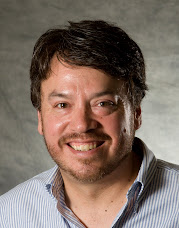
Nguyen is a common Vietnamese last name, like Kim or Park in Korea, like Garcia in Spain or Mexico, like Smith or Jones. I first heard the name sometime in 1974 or 1975, when I was a boy in Northern California. Because my parents had adopted three children from outside the United States, we belonged to a social network of similar families, and within this network, I met some of the first Vietnamese refugee children who came to America. At the same time, entire families who had escaped Southeast Asia—the first of the boat people—were finding sponsorship through churches and other charitable agencies. Each September for the next several years, as more and more of these kids showed up in schools, teacher after teacher struggled with the name Nguyen. Did you pronounce every letter? Was anything silent? What about the unfamiliar “ng”? Sometimes you could just tell which name was next just by where the teacher was in the roll—“…McDonald, Myers, Nardin, Needham…”—and the way he stared at the sheet of paper. Finally the kid, having been through this before, spoke up from his or her desk and politely offered the proper pronunciation: “win.” (More or less.) The teacher scribbled something—a phonetic, maybe—and moved on. As the days passed, the teacher would get more and more comfortable with the pronunciation and soon he wasn’t taking roll at all; he knew everyone who was supposed to be in his class by sight and first name. As the years passed, I one day realized that it had been a long time since I’d heard a teacher struggle with the name Nguyen. Maybe that’s when the conflict in Vietnam really ended.
My brother’s real last name is Nguyen. His first name was Tuan, which is pronounced “toon.” (Again, more or less.) Tuan came to America with his real father, whose name was Quang. Quang died about a year after their arrival and a family belonging to the church that had sponsored them offered to foster my brother. That family, one we knew through that adoption network, gave him the name Bill. I’ve never thought the name suited him, but then I don’t know what name would. Bill chose Alexander as his baptismal name; he was studying ballet by then, and he liked its classical sound.
In revising my autobiographical book, I figured it was best to change names, and tried to find names that I thought suited the various persons. When I came to my brother, I tried out a couple things, but none of them suited his character. Then I hit upon Ian: although it’s Gaelic for “John,” it sounds sort of of Asian—or, as-Ian. And I liked the fact that it both sounded and looked like Tuan and Nguyen. I especially liked that it sounds like Bill’s real last name. One morning this past summer I was explaining all this to Bill and Susie. They were still trying to decide on a name for The Boy, as we were all calling him then. When I said “Ian” they looked at each other and said, “Ian. I like that. We should call him Ian.” Susie was especially pleased that the name could be linked with her own late father, who was John.
I’m watching Ian as I write this. He’s finally fallen asleep: he was fussing for a bit, but I walked him around the house and showed him the view through the windows where his late grandfather lived. He likes looking at the trees. I like showing him the trees. Maybe that’s the Indian in me. Or rather, the “Ind-Ian.”
Monday, October 29, 2007


Monday, October 22, 2007
Mister, Mister
“Give it to Mr. Jerome…”
“Ask Mr. Jerome...”
“Mr. Jerome? Do you have a safety pin?”
In all my born days, I never thought I’d be answering to Mr. Jerome. But it seems to be a ballet school custom that at a certain level instructors and other personnel are referred to this way. My brother is always referred to as Mr. Bill, my sister-in-law as Miss Susannah, even by their students’ parents. Likewise with all the other instructors, and the ladies are invariably Miss. There have been exceptions. I imagine that the great primas like Alexandra Danilova and Cynthia Gregory were called by their surnames, while Mr. Misha and Mr. Rudolf frankly sound like a couple of émigré hairdressers. Balanchine was respectfully referred to as Mr. B., and in “The Company,” Robert Altman’s underrated and underappreciated movie about a Chicago dance company, the artistic director played by Malcolm McDowell was called Mr. A. Among insiders, this was seen as a reference to Gerald Arpino, co-founder and artistic director of the Joffrey Ballet, whose dancers and choreographers were used in the movie. (It also could have been a sly reference to Altman, though I think most of his friends thought of the late, great director as Bob).
When I arrived in Western New York this spring some of the parents around the ballet studios already knew who I was and what my relationship to Bill and Susie is; others had no idea. But as the school year progressed and I became better known, I started hearing myself referred to as Mr. Jerome. It makes me feel a little like I’ve just come out of a class on Introduction to Follicles, or like an offstage character in an Athol Fugard play. But the other day I finally succumbed; writing the reminder that there wouldn’t be any classes after 6 p.m. on October 31st, I hesitated. My dry-erase marker hovered. Then I wrote, “Please see Mr. Jerome if you need to make up a class because of Halloween.”
Well, interacting with kids on this level is for me a whole new game. Tonight I hear that the Creative Movement class—a kind of preschool ballet/calisthenics for three- and four-year-olds—will be having a little Halloween party next Monday. Maybe I should start thinking about my costume.
“Ask Mr. Jerome...”
“Mr. Jerome? Do you have a safety pin?”
In all my born days, I never thought I’d be answering to Mr. Jerome. But it seems to be a ballet school custom that at a certain level instructors and other personnel are referred to this way. My brother is always referred to as Mr. Bill, my sister-in-law as Miss Susannah, even by their students’ parents. Likewise with all the other instructors, and the ladies are invariably Miss. There have been exceptions. I imagine that the great primas like Alexandra Danilova and Cynthia Gregory were called by their surnames, while Mr. Misha and Mr. Rudolf frankly sound like a couple of émigré hairdressers. Balanchine was respectfully referred to as Mr. B., and in “The Company,” Robert Altman’s underrated and underappreciated movie about a Chicago dance company, the artistic director played by Malcolm McDowell was called Mr. A. Among insiders, this was seen as a reference to Gerald Arpino, co-founder and artistic director of the Joffrey Ballet, whose dancers and choreographers were used in the movie. (It also could have been a sly reference to Altman, though I think most of his friends thought of the late, great director as Bob).
When I arrived in Western New York this spring some of the parents around the ballet studios already knew who I was and what my relationship to Bill and Susie is; others had no idea. But as the school year progressed and I became better known, I started hearing myself referred to as Mr. Jerome. It makes me feel a little like I’ve just come out of a class on Introduction to Follicles, or like an offstage character in an Athol Fugard play. But the other day I finally succumbed; writing the reminder that there wouldn’t be any classes after 6 p.m. on October 31st, I hesitated. My dry-erase marker hovered. Then I wrote, “Please see Mr. Jerome if you need to make up a class because of Halloween.”
Well, interacting with kids on this level is for me a whole new game. Tonight I hear that the Creative Movement class—a kind of preschool ballet/calisthenics for three- and four-year-olds—will be having a little Halloween party next Monday. Maybe I should start thinking about my costume.
Sunday, October 14, 2007
Almost Golden
I haven’t watched this much college football in years. I didn’t always like the game. I didn't even watch it when I was a kid. Not until I became a fan during the ‘Niners' Montana-to-Clark Cinderella season did I start following football at all, and the only reason I started following it that particular season was having my left leg in a hip-to-ankle cast (in a freak accident, I’d nearly severed my Achilles tendon). There was little I could do besides watch television, and that magical, Bill Walsh-coached season that brought the West Coast Offense to the world’s attention changed my life. I was soon a solid pro fan of the kind who spends all Sunday in front of the television watching the games, drinking coffee, and reading the newspaper. I started watching the college game as a kind of adjunct to following the NFL; I wanted to know where all those draftees were coming from. Cal’s team was at the time overshadowed by UCLA and USC, so out of allegiance to my father’s favorite teams I followed the Big Ten, Notre Dame, and Boston College.
Though I followed Cal Sports as a student, not until I left did I start following them in earnest. Becoming an alumnus made everything about my alma mater seem different--I could even use the phrase alma mater, and it meant something--and that included tracking Cal's Nobel laureates and following the Division I football and basketball teams. Yes, I became a proud Golden Bear. I was merely annoyed at our one-time head coach Steve Mariucci for leaving Strawberry Canyon for the NFL as quickly as he did, an annoyance that was mitigated by the fact that he left to coach my beloved ‘Niners, but I will never forgive Jason Kidd, whose high school career—high school!—I’d followed, for entering the NBA draft in his sophomore year. Man, what ever happened to taking it slow and making it last? What ever happened to loyalty?
As a kid on New Year's Day I used to watch the Ohio State Marching Band do the Ohio Script at halftime at the Rose Bowl. I know the melody of “The Victors,” Michigan’s fight song. I hate the USC Trojans—always have, always will--and said that if Cal ever made it to the Rose Bowl I would move earth and heaven to get there. So you can imagine my disappointment this past weekend. Cal had the Number One ranking in its grasp; the Golden Bears were brushing their fingertips up towards the top of the coaches’ polls the way Michelangelo's Adam is brushing the hand of God on the roof of the Sistine Chapel. Kentucky helped us by beating LSU in triple overtime (one of the greatest college games I’ve ever seen, by the way)…and Cal lost. Worse, we lost to Oregon State, a Pac-10 team that was three-and-three. Whether mercifully or miserably, I wasn’t able to actually watch the game because it wasn’t broadcast here in Buffalo (and my brother doesn’t have one of those football-addict’s cable channels), but I followed it online. I was already planning to have the coaches’ poll from today printed on a t-shirt.
Jesus wept.
Oh, well. That’s okay. Pasadena gets too much smog anyway…
Though I followed Cal Sports as a student, not until I left did I start following them in earnest. Becoming an alumnus made everything about my alma mater seem different--I could even use the phrase alma mater, and it meant something--and that included tracking Cal's Nobel laureates and following the Division I football and basketball teams. Yes, I became a proud Golden Bear. I was merely annoyed at our one-time head coach Steve Mariucci for leaving Strawberry Canyon for the NFL as quickly as he did, an annoyance that was mitigated by the fact that he left to coach my beloved ‘Niners, but I will never forgive Jason Kidd, whose high school career—high school!—I’d followed, for entering the NBA draft in his sophomore year. Man, what ever happened to taking it slow and making it last? What ever happened to loyalty?
As a kid on New Year's Day I used to watch the Ohio State Marching Band do the Ohio Script at halftime at the Rose Bowl. I know the melody of “The Victors,” Michigan’s fight song. I hate the USC Trojans—always have, always will--and said that if Cal ever made it to the Rose Bowl I would move earth and heaven to get there. So you can imagine my disappointment this past weekend. Cal had the Number One ranking in its grasp; the Golden Bears were brushing their fingertips up towards the top of the coaches’ polls the way Michelangelo's Adam is brushing the hand of God on the roof of the Sistine Chapel. Kentucky helped us by beating LSU in triple overtime (one of the greatest college games I’ve ever seen, by the way)…and Cal lost. Worse, we lost to Oregon State, a Pac-10 team that was three-and-three. Whether mercifully or miserably, I wasn’t able to actually watch the game because it wasn’t broadcast here in Buffalo (and my brother doesn’t have one of those football-addict’s cable channels), but I followed it online. I was already planning to have the coaches’ poll from today printed on a t-shirt.
Jesus wept.
Oh, well. That’s okay. Pasadena gets too much smog anyway…
Monday, October 8, 2007
Zoom-Zoom
I haven’t had a car in about twenty years. I’ve driven, sure, but nowhere nearly as much as since moving to Buffalo. There is a public transit system here—bus routes, and a light-rail downtown—but this is a car culture. My brother finally bought the van he’d been shopping for all summer (with three kids under six, he needed it) and gave me his wife’s old Nissan sedan with 110K on the odometer. It’s a sturdy car, a good car, and a dependable car. He had the leak in the back left tire fixed, so we don’t have to check the darn tire pressure every other day. So now I drive that car everywhere. And it’s pleasant to be able to get up and go whenever I want to, but there are drawbacks.
For one thing, and I’ll get this one out of the way first, there’s the price of fuel. I almost lapsed into I-remember-when, but I’m sure there are people driving who really remember when. Thank God the cost-of-living here is otherwise reasonable, and that for me it’s really at moment a non-issue. There is also the drive-in thing. It’s not just that the food is there, and that it’s convenient. It’s that you end up eating in your car. And what you end up eating is so unhealthy. And you’re not getting out of your car and walking around as much.
But for me the most exasperating thing about the car culture here are the street systems and the freeway system. Driving on the Buffalo streets and highways can make you crazy. Growing up in California, with one of the greatest and best-designed freeway systems in the world, I guess I’m spoiled. San Jose itself didn’t have much to recommend it when I was growing up other than its proximity to other places, but its freeways and streets were excellent. There were ample access lanes; surface streets were wide. Buffalo’s interchanges, on the other hand, tend to be too small for the traffic whose flow they try to manage. Freeway-entrance and exit lanes are so short as to be non-existent. You often have to use the same lane to exit that other drivers are using to get on. Surface street lanes are narrower than the soccer-mom SUVs and ballet-dad vans that crowd them. I learned this when riding my bike; more than once I was honked at or yelled at for following the rule that says you should bike on the right shoulder, with traffic. There is also the matter of the mix of kinds of drivers. Buffalo has young drivers, old drivers, and busy suburban professional drivers. It’s a bad mix. I’ve already become adept at profiling drivers by the way they're driving. But then, maybe I’m being profiled too. I’m an older driver than I was twenty, even ten years ago, but I'm still someone who drinks coffee while he drives. My Bluetooth does allow me to talk on the phone and drive at the same time. At night, however, my eyes don’t seem to work as well as they used to.
There’s also the matter of the wildlife. I've never seen so much roadkill. Skunks. Raccoons. Squirrels. Rabbits. The occasional deer. And that's just on my own street! As I drove here in May in my rental car, a large deer bounded out from the side of the Thruway and I had to brake harder than expected. And just the other morning on my way to Orchard Park, I was talking on the phone and drinking coffee (the Nissan is an automatic, natch) and a woodchuck came waddling across the road. It wasn’t in any hurry. I’ll bet it had an opinion about drivers in Buffalo.
For one thing, and I’ll get this one out of the way first, there’s the price of fuel. I almost lapsed into I-remember-when, but I’m sure there are people driving who really remember when. Thank God the cost-of-living here is otherwise reasonable, and that for me it’s really at moment a non-issue. There is also the drive-in thing. It’s not just that the food is there, and that it’s convenient. It’s that you end up eating in your car. And what you end up eating is so unhealthy. And you’re not getting out of your car and walking around as much.
But for me the most exasperating thing about the car culture here are the street systems and the freeway system. Driving on the Buffalo streets and highways can make you crazy. Growing up in California, with one of the greatest and best-designed freeway systems in the world, I guess I’m spoiled. San Jose itself didn’t have much to recommend it when I was growing up other than its proximity to other places, but its freeways and streets were excellent. There were ample access lanes; surface streets were wide. Buffalo’s interchanges, on the other hand, tend to be too small for the traffic whose flow they try to manage. Freeway-entrance and exit lanes are so short as to be non-existent. You often have to use the same lane to exit that other drivers are using to get on. Surface street lanes are narrower than the soccer-mom SUVs and ballet-dad vans that crowd them. I learned this when riding my bike; more than once I was honked at or yelled at for following the rule that says you should bike on the right shoulder, with traffic. There is also the matter of the mix of kinds of drivers. Buffalo has young drivers, old drivers, and busy suburban professional drivers. It’s a bad mix. I’ve already become adept at profiling drivers by the way they're driving. But then, maybe I’m being profiled too. I’m an older driver than I was twenty, even ten years ago, but I'm still someone who drinks coffee while he drives. My Bluetooth does allow me to talk on the phone and drive at the same time. At night, however, my eyes don’t seem to work as well as they used to.
There’s also the matter of the wildlife. I've never seen so much roadkill. Skunks. Raccoons. Squirrels. Rabbits. The occasional deer. And that's just on my own street! As I drove here in May in my rental car, a large deer bounded out from the side of the Thruway and I had to brake harder than expected. And just the other morning on my way to Orchard Park, I was talking on the phone and drinking coffee (the Nissan is an automatic, natch) and a woodchuck came waddling across the road. It wasn’t in any hurry. I’ll bet it had an opinion about drivers in Buffalo.
Monday, October 1, 2007
Revisiting Brideshead
Evelyn Waugh is considered a major writer, and Brideshead Revisited his masterpiece. I was long in thrall to the novel (and the BBC miniseries that brought the story to a new generation of English and American audiences) but hadn’t picked it up in some time. I did so recently, wondering if my perspective on the novel had changed. Certainly part of the novel’s appeal was the evocation of the relationship between Charles Ryder and Sebastian Flyte. Further appeal lay in the geographical, historical, and material settings—Oxford; Europe between the wars; Brideshead itself. Flyte’s family, the Marchmains, are extremely wealthy, Catholic, dysfunctional. I don’t think Waugh would have liked that label any more than I do, but in my recent re-reading it seemed especially apt.
What also came through this time around were various things that I’d missed and, truth be told, lacked the maturity to see before. For one thing, the novel is more melodramatic than I’d remembered. I actually found the dialogue in the final scene between Julia and Charles embarrassing, almost unbelievable. I was also struck by the number of occasions on which various characters convey large amounts of crucial information to Charles in private confidences—he hears a number of rambling, elliptical monologues from Julia, Rex Mottram, Cordelia, Anthony Blanche. In this novel narrated by Charles, an avowed agnostic, it’s interesting how many confessions he hears. Lady Marchmain never struck me as such a terrible person before, but this time around I was really taken aback by her character. She has the best of intentions, but her devotion to her faith frequently blinds her to the ways in which it suppresses and in some cases damages her four children, rendering them incapable of fitting properly into society. This struck me as painfully sad, even tragic.
Cordelia repeats the line from Chesterton that gives the second half of the book its title: the quote refers to an ability to bring back one who wanders far with a mere twitch upon the thread. This quote and the book as a whole have been given a positive read by one Catholic critic—that the power of faith even reconciles all the Marchmains, even the father, in the end. But at what a cost! In her earliest scenes, the youngest daughter, Cordelia, shows signs of what we’ve recently labeled “social intelligence”, but by the book’s end resigns herself to spinsterhood. Sebastian nearly pays for his alcoholism with his life, but also eventually gets both the financial support and the geographical distance he seeks. The elder son, Bridey, has the socio-economic makings of a British elderstatesman, yet it falls to the comically endearing Rex Mottram, a parvenu Canadian, to claim that position. Bridey’s sense of duty to family and church prevents him from claiming his proper position in society. Julia, the beautiful older daughter, also fails to attain her rightful social position, and is pulled back to the dysfunctional family core at the cost of one unhappy marriage and an affair with Charles.
All this was lost on me before, and noticing it this time around felt like I’d made my peace with the novel as Charles makes his with memories. It’s a book that because of its material and moral weightiness easily lends itself to a symbolic, positivistic reading, but I think its truth is darker, sadder, and much more ambiguous. I will be curious to see whether the forthcoming movie version will capture this or not.
What also came through this time around were various things that I’d missed and, truth be told, lacked the maturity to see before. For one thing, the novel is more melodramatic than I’d remembered. I actually found the dialogue in the final scene between Julia and Charles embarrassing, almost unbelievable. I was also struck by the number of occasions on which various characters convey large amounts of crucial information to Charles in private confidences—he hears a number of rambling, elliptical monologues from Julia, Rex Mottram, Cordelia, Anthony Blanche. In this novel narrated by Charles, an avowed agnostic, it’s interesting how many confessions he hears. Lady Marchmain never struck me as such a terrible person before, but this time around I was really taken aback by her character. She has the best of intentions, but her devotion to her faith frequently blinds her to the ways in which it suppresses and in some cases damages her four children, rendering them incapable of fitting properly into society. This struck me as painfully sad, even tragic.
Cordelia repeats the line from Chesterton that gives the second half of the book its title: the quote refers to an ability to bring back one who wanders far with a mere twitch upon the thread. This quote and the book as a whole have been given a positive read by one Catholic critic—that the power of faith even reconciles all the Marchmains, even the father, in the end. But at what a cost! In her earliest scenes, the youngest daughter, Cordelia, shows signs of what we’ve recently labeled “social intelligence”, but by the book’s end resigns herself to spinsterhood. Sebastian nearly pays for his alcoholism with his life, but also eventually gets both the financial support and the geographical distance he seeks. The elder son, Bridey, has the socio-economic makings of a British elderstatesman, yet it falls to the comically endearing Rex Mottram, a parvenu Canadian, to claim that position. Bridey’s sense of duty to family and church prevents him from claiming his proper position in society. Julia, the beautiful older daughter, also fails to attain her rightful social position, and is pulled back to the dysfunctional family core at the cost of one unhappy marriage and an affair with Charles.
All this was lost on me before, and noticing it this time around felt like I’d made my peace with the novel as Charles makes his with memories. It’s a book that because of its material and moral weightiness easily lends itself to a symbolic, positivistic reading, but I think its truth is darker, sadder, and much more ambiguous. I will be curious to see whether the forthcoming movie version will capture this or not.
Subscribe to:
Comments (Atom)