Here in Buffalo my radio is more or less locked on the local NPR station. Not necessarily its musical programming, but its news. Though I’ll sometimes seek out alt pop/rock or Air America for variety, from “Talk of the Nation” through “Fresh Air,” whenever I’m driving I’m perpetually listening to WBFO. I’ve been a public radio junkie before: in New York, after 9/11, public radio was a lone voice of sanity during an insane time; a few years after that I got rid of my television altogether, and became something of a WNYC snob. But here in Western New York I’ve had a relapse: I’m officially an NPR junkie again.
I suppose it has as much to do with this protracted run-up to the primaries as the amount of driving I now do. I was addicted to CNN prior to 9/11, and during the 2006 midterm elections, having obtained not just a television set but a cable connection, I became hooked on CSPAN. But ever since their zenith (hey!) back in the early Nineties, since the advent of MSNBC and streaming video, since the coming of YouTube and FaceBook, the cable news organizations, like media in general, regardless of political tilt and whatever the form, have become ever louder and noisier. It goes back to the “crawl,” I guess. Now no matter what the form or channel, it seems to have become standard that the visual frame be as busy and subdivided as the screen in an episode of “24”.
My personal turning point with CNN was Bill Hemmer’s defection to Fox News: no more American Morning eye candy—worse, he was sweetening the day’s start for all those right-wingers! On his departing, Bruno Magli-shod heels came the network’s overhype of the 2006 Hurricane Season following Katrina. You could practically hear the rubbing of dozens of producers’ palms in glee as they unveiled their stratotech, multimillion-dollar CNN Weather Center—and the record-hurricane season predicted hour after hour that spring and summer never materialized (and with due respect to Nobel laureate Gore, so far nothing like it has).
Back in the late Eighties and early Nineties, one of any given week’s highlights was my ritual of the Sunday New York Times. The parceling-out of Sunday paper sections goes back a long way, historically as well as personally. On the way back from Mass at St. Lucy’s Dad used to stop at the drive-up dairy at the corner of San Tomas Aquino Road and Harriet Avenue to pick up that week’s Sunday San Jose Mercury-News. We couldn’t touch it until we got home, but when we did, by choosing the movie section over the sports or the comics—and choosing it over the fight over the comics section—I could set myself apart from my ten siblings. (And I didn’t not-choose the sports section—like my default admission to the roster of a reluctant third-grade kickball team captain during P.E., the sport section not-chose me.) I chose further when I started reading the San Francisco Chronicle—which again, didn’t feel like a choice but a kind of surrender. Who cared about San Jose? There was a whole city to the north, with real stories and lives. The San Francisco network affiliates’ signals being stronger, we San Joseans pulled in news from The City before we pulled in local stories.
By the time I got to Berkeley I was already in some ways looking East (and not the East that others were looking to, across the Pacific). I can see now that I lacked imagination, or at least enough to imagine that I would sometime move away from California; not until my late twenties did the possibility remotely occur to me, and the move itself was motivated by more reckless decision-making than anything like a long-cherished dream. But by then I’d been a regular reader of the Times and the New Yorker for years. Their writers and critics and editors—Johnny Apple, David Richards, “Punch” Sulzberger; Robert Gottleib, Adam Gopnick, John Lahr, and of course, Pauline Kael—I didn’t always know by name (with some conspicuous exceptions), but they prodded and teased and poked and rasped and refined and polished and buffed my mind. Or perhaps they didn’t; perhaps there wasn’t enough there to prod or tease or poke. My ideas were more like mere ideas of ideas, or notions of ideas, usually theirs, and seldom mine. I was far from having the wherewithal to see that, or say that; from my North Oakland apartment I would stroll over to Piedmont Avenue and get a large Peet’s House Blend and the Sunday Times and tuck in. My fingers soon blackened with printer’s ink, and when I licked my thumb or index finger I briefly tasted all three together—the bitter alkaline coffee, sugar and metallic ink. And somehow, without trying to be, I’d also become a sports fan myself, so if there was a game on (NFL, college hoops, or the A’s) my day felt complete. And because my day felt complete my life sometimes felt or seemed complete. It wasn’t, though. Far from it. It would take the move to New York City, and fifteen years there, where for a long time I would mistake that remarkable city’s completeness as a sense of completeness in my own life, in my own self. I was finally, rudely awakened to the falsehood of that, and not all that long ago.
Not just years but decades have passed since the Sunday San Jose Mercury-News, since my discovery of a San Francisco Chronicle columnist named Herb Caen made me feel like I was the only one reading him, like he and I were having a private conversation. Caen lived long enough to see the rise of cable and the birth of the Internet; perhaps he knew that a writer is really writing for one person, and one person only: himself. I suppose in a way that’s what this blog is about. I read the Times online now, which saves paper and all that. I like that you can get news 24/7; no more evening edition or “bulldog” edition—we have website updates instead. I’m no more or less nostalgic about those Sundays back in North Oakland with the Times and Peet’s Coffee and the Forty-Niners games than I am about those back in San Jose. We evolve, and so does technology. For now, radio remains as it was in its earliest days, so I’ll keep listening to those voices in the same way I used to read bylines: Lakshmi Singh. Carl Kasell. Terry Gross…
skip to main |
skip to sidebar
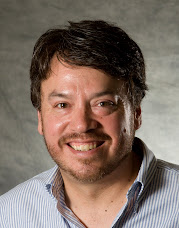
The Nickel City. The Queen City. The City of Good Neighbors. My place of residence now and for the time being.


Professional Links
About Me
- Jerome Joseph Gentes
- Buffalo, New York, United States
No comments:
Post a Comment